
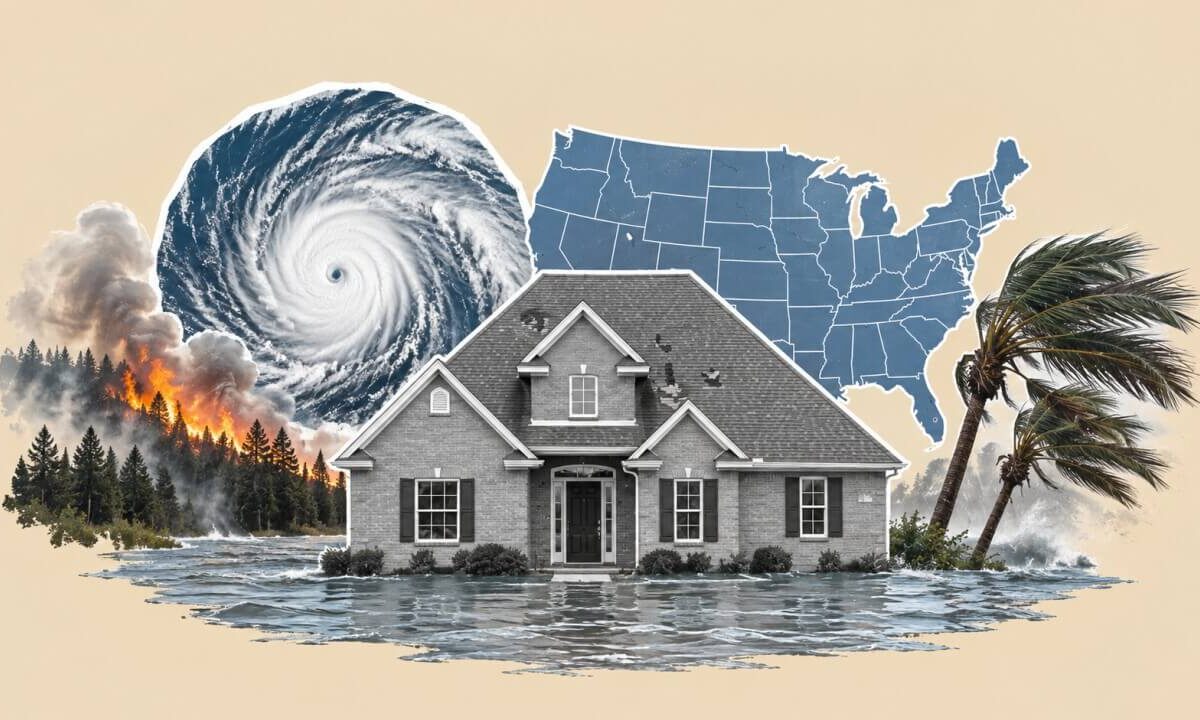
Climate risk has become one of those housing subjects that can produce a frightening headline before anyone has read the footnotes.
About 26.1% of U.S. homes, representing roughly $12.7 trillion in real estate value, face severe or extreme exposure to flooding, hurricane winds, or wildfire.
Exposure, though, is not the same thing as destruction. Nobody is predicting that $12.7 trillion in housing will disappear. Risk models are identifying homes that face serious exposure to at least one major hazard.
In housing, caution usually pays. A house facing climate risk is not a house with a demolition date attached to it.
Why are so Many of these Houses in Danger?
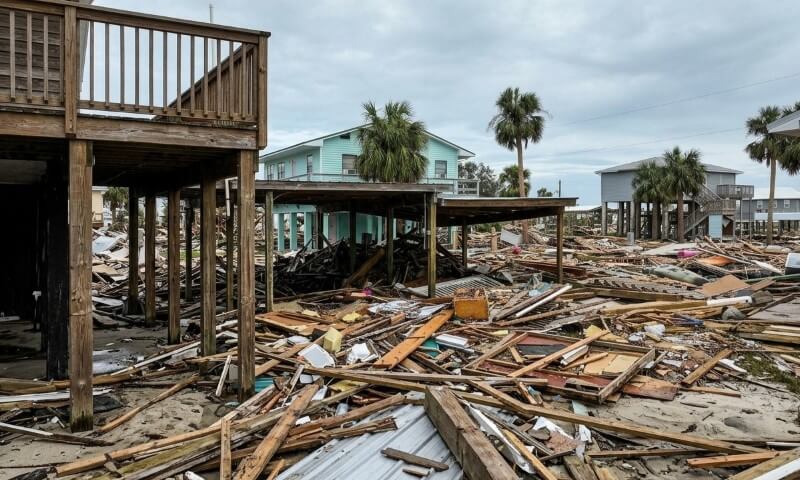
Current figures put 26.1% of American homes in the severe or extreme category for flood, hurricane wind, or wildfire risk. Combined property value attached to those homes is roughly $12.7 trillion, according to PR Newswire.
An earlier report put 44% of homes and $22 trillion in property at risk, but that older calculation also counted heat and air quality. Current analysis covers only flood, wind, and wildfire.
Looking only at those same three hazards, the comparable 2024 value was about $14.1 trillion.
That distinction is important. A reader could easily look at $22 trillion and $12.7 trillion and assume risk has dropped dramatically.
Data categories changed, so a simple comparison does not tell the full story.
Real estate has always rewarded people who read past the headline. Inspection reports, loan estimates, tax bills, and insurance policies all have a habit of becoming more interesting on page two.
Hurricane Risk Affects the Largest Share of Homes
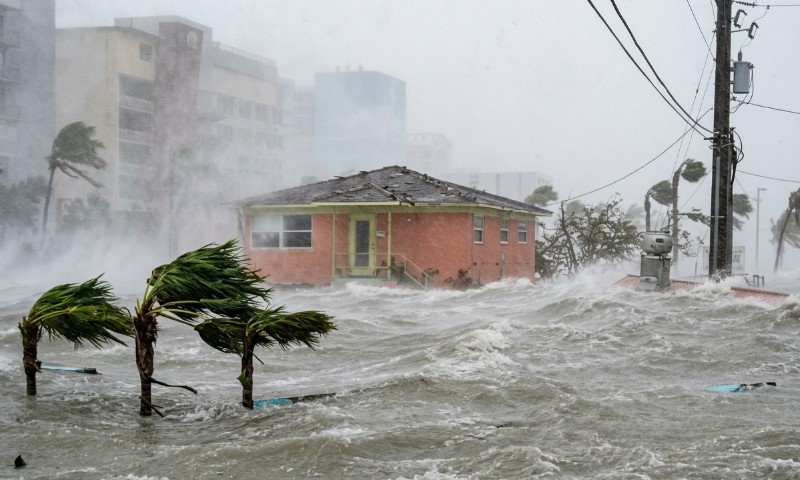
Hurricane wind is the most widespread of the three major risks measured.
According to Realtor, about 18.3% of U.S. homes, carrying nearly $8 trillion in value, fall into the severe or extreme wind-risk category.
Concentration becomes especially striking in coastal markets.
Across 14 major metropolitan areas in Louisiana, Florida, South Carolina, and Texas, every home is classified as exposed to severe wind risk. Miami, Houston, and New Orleans are among them.
Buyers usually spend far more time comparing mortgage rates than deductibles, which is understandable.
Mortgage payments show up every month. A five-figure storm deductible tends to introduce itself only when something has gone badly wrong.
Flood Risk Extends Outside Traditional Flood Zones
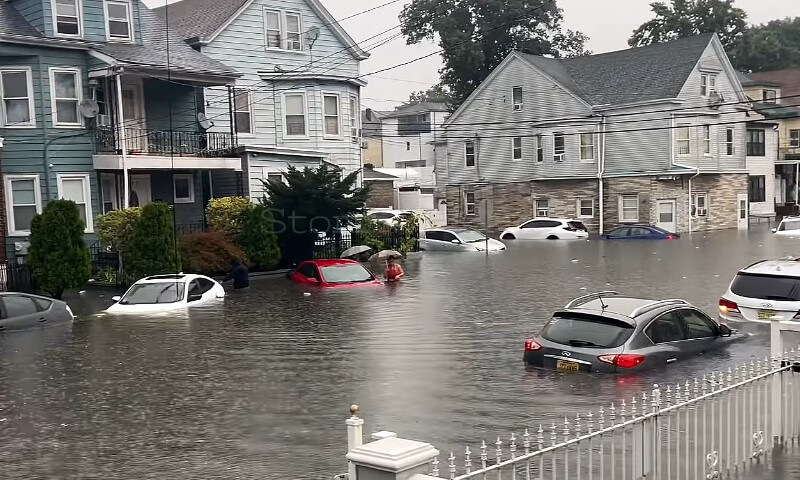
Nearly 6 million homes worth about $3.4 trillion face severe flooding risk over the next 30 years.
Risk modeling also identifies roughly 2 million additional homes outside FEMA high-risk flood zones. Those properties carry close to $1 trillion in value. Differences can arise because broader models account for factors such as heavy rainfall and future climate conditions that federal maps may not fully capture.
Between 2014 and 2024, 29% of National Flood Insurance Program claims involved properties outside current high-risk flood areas.
Several large markets show how substantial that gap can become:
- New York has about $95.3 billion in property exposure identified by broader modeling but not reflected in federal flood designations.
- Los Angeles follows at about $65.6 billion.
- San Francisco is close behind at roughly $54.9 billion.
For years, buyers asked a simple question: Is the house in a flood zone? Increasingly, that question is too narrow.
A better conversation includes actual flood exposure, drainage, local rainfall patterns, nearby water, elevation, insurance options, and what competing risk models say about the property.
FEMA designations still matter, especially for insurance and lending, but a line on a federal map does not settle every risk question.
We remember plenty of buyers who wanted a yes-or-no answer about almost everything. Houses rarely cooperate, and flood risk is becoming another example.
Wildfire Risk Is Smaller Nationally but Highly Concentrated
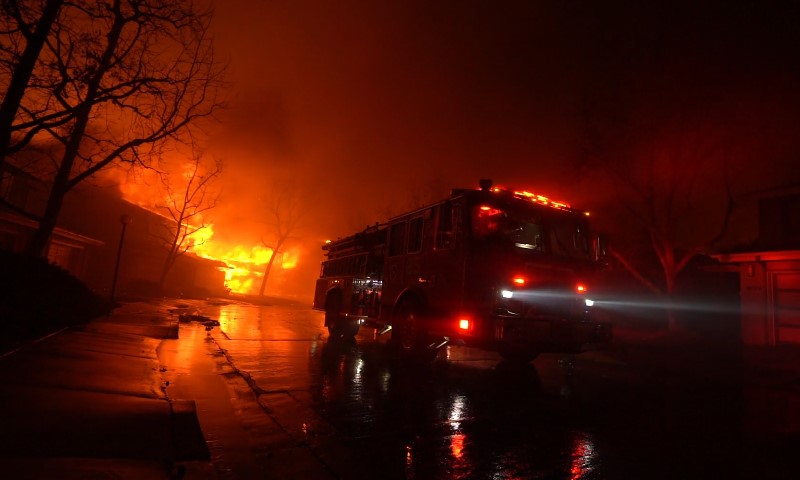
Wildfire exposure covers a smaller share of U.S. housing than hurricane wind, but concentration in certain markets makes the financial effect severe.
Around 5.6% of homes, valued at approximately $3.2 trillion, face severe or extreme wildfire risk.
Nearly 39% of those high-risk homes are in California, accounting for about $1.8 trillion in property value.
California also shows how climate risk can migrate into the insurance market. FAIR Plan exposure reached about $650 billion by June 2025, an increase of 289% compared with 2021.
Insurance Is Where Climate Risk Becomes a Housing-Cost Problem
Insurance is where abstract exposure starts showing up in an owner’s monthly budget.
Federal insurance data suggests that pressure has been building for several years. Between 2018 and 2022, average homeowners insurance premiums increased 8.7% faster than inflation.
A fixed-rate mortgage can sit quietly at the same interest rate for decades. Insurance has no such obligation.
Miami carries the heaviest insurance burden among the 100 largest metropolitan areas. Annual premiums equal roughly 3.7% of property value there, compared with about 0.8% nationally. New Orleans follows at roughly 3.6%.
Florida’s concentration is hard to miss. Five metropolitan areas in the state rank among the top 10 for insurance burden.
Insurability Can Affect Financing and Resale
Most mortgage lenders require homeowners insurance. Difficulty obtaining affordable coverage can therefore become a financing problem.
Buyers who cannot secure acceptable insurance may struggle to close a loan. Sellers can feel that pressure too.
That problem is already reaching closing tables. In a 2025 industry survey, 47% of real estate agents said they had encountered more home-insurance problems during transactions in 2024 than a year earlier. Shares climbed to 72.7% in California and 72.6% in Florida.
A property that is difficult or expensive to insure may attract fewer buyers, especially when nearby alternatives carry lower ownership costs.
Mortgage calculators do not always capture that problem neatly.
Monthly principal and interest may look manageable, yet taxes, insurance, deductibles, association fees, maintenance, and repairs can change the answer in a hurry.
Anyone who has sat at a closing table knows that purchase price is only the opening number.
What Buyers and Sellers Should Take Away
Buyers already face high home prices and mortgage rates in many markets.
Climate and insurance may not be the first concerns on a shopping list, but they are becoming harder to treat as closing-week details.
A sensible review now includes a few items earlier in the process:
- Check flood, hurricane-wind, and wildfire exposure for the specific property.
- Compare official flood designations with broader risk models.
- Request real insurance quotes before assuming a home fits the budget.
- Read deductibles carefully, especially separate hurricane or wind deductibles.
- Consider how insurance availability could affect a later resale.
None of that means one-quarter of American homes are doomed. Such a conclusion would push the data much further than it goes.
What the figures do show is that climate exposure is becoming part of the cost of owning, financing, and selling real estate.
Buyers may feel it through premiums and deductibles. Sellers may feel it through financing problems or a smaller pool of interested purchasers.
Existing owners may discover that a house affordable five years ago has become more expensive to carry even without a new mortgage.
Closing Thought
Real estate has always been local, and climate risk follows the same rule. National numbers tell us the issue is large, but nobody owns the national average home.
Climate exposure does not mean every high-risk home is headed for disaster.
It does mean insurance, financing, and physical risk deserve a place in the conversation before a buyer signs the paperwork, not after.
After three decades around housing, I have learned that expensive surprises rarely become cheaper because nobody asked about them early.

Home Stats Report
Home Stats Report takes a practical, numbers-first look at the American housing market, drawing on decades of real estate experience, historical trends, and the everyday realities of buying and selling homes. Housing has never been as simple as a headline suggests. Home prices rise, mortgage rates change, inventory tightens, and buyers adjust their expectations. Home Stats Report provides market commentary, analysis, and general information for educational purposes only. We do not offer financial, investment, mortgage, or real estate advice.
All reports by Home Stats Report